Your Loneliness Is Their Best-Selling Product

Life alone has become easier and more convenient than ever. Large corporations have built an entire business model around it.
By Jakub Dymek
There is one thing that the internet — as it forced its way into our lives in the first decade of the 21st century — promised above all else. That we would never be alone again. People from all over the world, friends and strangers alike, within arm's reach. Uninterrupted contact with family and a live stream of information about what our old school friends were up to.
The ability to enter any subculture and share even the most niche interest. People willing to play — in both the innocent and the less innocent sense — 24 hours a day, 7 days a week, in every time zone.
The Loneliness Epidemic in a Thicket of Connections
It is impossible to say that in this regard the great digital platforms, smartphones, and the surrounding thicket of screens and notifications have failed us. On the contrary. We are glued to devices from which someone is constantly speaking to us, very eager to sell us something, to attract our attention, or to urgently share even the most trivial piece of information.
Nor can one deny that if we truly want to be in contact with those close to us, we have better tools for it than ever before. And finally: there is no shortage of entertainment or opportunities to meet someone. Algorithms are happy to take the first step on our behalf.

And yet successive governments are declaring a "loneliness epidemic," mental health problems on that basis are growing at an avalanche pace, and our intimate, romantic, and social lives seem to be faring worse than before. More than that: servicing lonely people and profiting from the fact that we sit within four walls has become the cornerstone of the business model for new digital services and applications. Although we have never complained so much about loneliness, at the same time cutting ourselves off from others has never been so convenient, tempting, and pleasurable.
What happened?
We Prefer the Screen to Another Person
"Do I want to go out with friends? For a drink? Catch up on gossip? No, it's lovely of you, but no thank you" — declares Financial Times journalist Jo Ellison. "All of these suggestions fill me with dread. I love, I genuinely adore my friends. But traveling halfway across the city, squeezing into some venue, trying to have a conversation... All that 'socializing' feels far too much like work."
What outing, Ellison asks rhetorically, can possibly compare with "sitting on the internet" — a few blissful hours of obligation-free clicking and tapping on a screen?
This shameless confession appeared in the spring of 2025. Had it appeared 5, 10, or especially 20 years ago, it would have been seen as an expression of eccentricity or an admission of failure. Who, when they could spend their free time with friends out in the city, chooses to sit alone at home and click? A nerd, a loser, an incel.
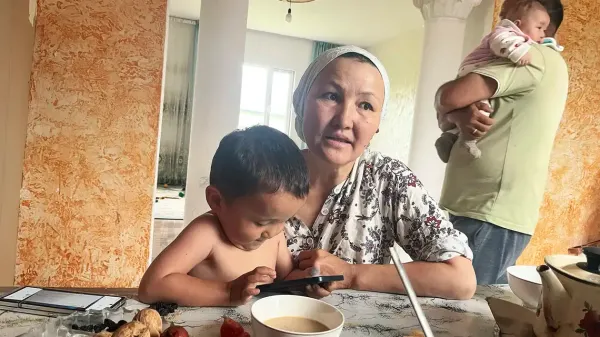
Popular culture invented enough words to describe individuals who, for various reasons, feel more comfortable with a screen than with another human being. But something has changed. Admitting that we prefer a screen to another person is no longer a cause for shame. The preference for spending time alone, and the conviction that even a very informal outing to see people requires effort and "feels like work," has become so widespread that it is increasingly hard to pretend otherwise.
After the Pandemic, We Stayed Home
The journalist's words openly express what many of us think in secret. But research provides the evidence too. Americans today spend on average a hundred minutes more per day at home than they did in the days when George W. Bush was invading Iraq, MTV was still cool, and you had to dial up to access the internet via modem. This can be calculated using the American Time Use Survey, a recurring study conducted by the Department of Labor.
The measure of time spent at home obviously shot upward during the pandemic, enforced isolation, and "social distancing." What is striking, however, is that when the lifting of pandemic restrictions, the arrival of vaccines, and the reopening of restaurants and hotels finally allowed us to leave our homes — we decided to stay in them.
The amount of time spent within one's own four walls jumped by over an hour and a half in 2020 (relative to the previous year), before falling in subsequent years by 20 minutes from its peak. Twenty minutes — that is all that remains of every resolution to return to sport or take trips out of the city. Just 20 minutes more time outside the home than during the pandemic is the average for Americans when nothing is forcing them to stay in.
Home Entertainment: On the Sofa, Smartphone in Hand
Patrick Sharkey of Princeton University estimated which home activities are consuming more time than before. Aside from sleep, the top three are work done from home, entertainment, and eating. The time "saved," for example on commuting, we "invested" in working more from home and enjoying screen-based entertainment.
Because although these particular studies do not include as a separate category the time spent on the sofa or in bed with a smartphone in hand — let us be honest — that is often exactly what home entertainment looks like. It seems unlikely that respondents declaring more time spent on entertainment at home are devoting themselves exclusively to board games or jigsaw puzzles. Or to any offline entertainment at all.
Of course, all of this consists of averaged measures and certainly does not capture the full complexity of trends in a modern society of tens or hundreds of millions of citizens. But alongside data for the general population, we have equally interesting data for a group that is particularly significant in this context: the generation that grew up with smartphones.
The Proportion of Young People Having Sex Is Falling
In developed economies, a certain pattern repeats itself the world over. Younger generations have overtaken the oldest members of society in terms of declared loneliness and the amount of time spent without the presence of others. The proportion of young people who have sex, go to parties, or drink alcohol is falling. Meanwhile, time spent in front of screens, the number of suicide attempts, and reported mental health problems are all rising.
Dozens of studies point to similar trends. And the tone in which they are reported ranges from alarming to outright apocalyptic. Quite literally and without much exaggeration — from the moment people lose interest in one another, extinction is a straight road away.
Loneliness in Youth
Before we look at that data, however, it is worth pausing at one observation. Historically, loneliness was rather the domain of eccentrics, the unfortunate, and radicals — from social outcasts to people living in remote areas or in religious seclusion, to those who practiced rare professions requiring distance from others.
In more recent times, loneliness has been discussed in the context of old age or the loss of loved ones. Until not long ago, the social portrait of a lonely person most commonly depicted a widow living in the countryside, unvisited by relatives and out of touch with the institutions of social life, with the possible exception of a place of worship. It seemed clear to us that loneliness was the second greatest curse — after poor health — of old age.
In her book A Biography of Loneliness: The History of an Emotion, cultural historian Fay Bound Alberti of King's College London argues that loneliness as a phenomenon came into existence only in the modern era. Earlier, when survival without others was impossible, being alone was not a mass problem. And the luxury of suffering from loneliness was something only the powerful could afford.
Of course, one might argue that the poor experienced it just as acutely — only no one asked for their opinion. One thing, however, is certain: we never previously associated loneliness as a problem of youth. Until now.
The Unspoken Cause of Declining Birth Rates
Psychologist and author of books on Generation Z Jean Twenge and economist David Blanchard, in a joint report on the "declining life satisfaction" of young adults in English-speaking countries, cite dozens of troubling indicators:
- Nearly half of young women in Australia — 46 percent — report mental illness.
- 39 percent of fifteen-year-olds in Ireland deliberately hurt themselves.
- Girls with mental health problems — mainly eating disorders — account for one third of all admissions to intensive care for that age group in the United Kingdom.
- A feeling of "persistent sadness and hopelessness" is declared by more than half of female high school students in the US, while young men today spend on average as much time each day in solitude as men approaching retirement age did just a decade ago.
As calculated by John Burn-Murdoch, who studies economics, demography, and social divisions, the proportion of people under 34 forming couples has fallen by several dozen percent worldwide over the past three decades. The reluctance or inability to form relationships — this "relationship recession" — is said to be the unspoken cause of declining birth rates.
Researchers Béatrice d'Hombres and Chiara Gentile, working for the European Commission, demonstrated using data covering EU countries that there is a clear correlation between intensive social media use and a declared sense of loneliness.
Lonely Poles Are Not Older People in Villages, But Young People in Cities
Let us look at the profile of people experiencing loneliness in Poland. From a CBOS report in autumn 2024:
"Over the past seven years, the proportion of those experiencing loneliness very often or permanently has doubled. Today it is approximately one in every twelve adults.
Factors conducive to experiencing loneliness include young age (under 34), living in a large or major city, being single, and dissatisfaction with one's own financial situation.
Political views also proved significant in this context. According to the analysis, people with centrist, right-wing, or undefined political views are less exposed to a sense of loneliness than those identifying with the left."
Almost everything here is the opposite of what the previously dominant picture of the problem would suggest. Not older people in villages, but young people in cities. Generations who have dating apps at their disposal, who speak languages and have passports in their pockets, and who enjoy better labor market conditions than their parents. Also people who are not literally alone — they have classmates and colleagues around them at university and at work.
Ironically, the highest proportion of those declaring loneliness is in the group of pupils and students (37 percent) and in the 18–24 age group (32 percent). This is more than among retirees (26 percent) and the over-75s (25 percent).
It is worth asking, therefore, whether this is really about loneliness understood as the absence of other people. Because even the way CBOS researchers phrased the question suggests the problem may be of a somewhat different nature.
"Does it happen that, despite being surrounded by various people, you feel lonely?" the interviewers ask respondents.
The Anti-Social Century
How do we explain the "loneliness epidemic" when people surround us — and thanks to digital platforms are always within reach? And how do we reconcile this with Jo Elson's confession that she does not want to see anyone, even though she can, and even though — as she herself declares — she "loves her friends"? And finally: if we ourselves declare that we prefer to spend time alone, what exactly is the problem?
Derek Thompson, in a widely discussed essay published in The Atlantic, declares that the 21st century is the "anti-social century." Not lonely — anti-social. Loneliness continues to affect the same groups as 30 and 50 years ago: mainly the older, the poorer, the sick. But the phenomenon that particularly characterizes our era needs a different name. Not loneliness, but chosen isolation.
This is the common denominator linking the capricious London journalist who has no desire to see her friends with the millions of young people who declare loneliness while surrounded by peers both online and offline. In both cases, the costs — financial and psychological alike — of entering into a relationship with others seem greater than the cost of abstaining.
What Drives Chosen Loneliness
As social psychologist Nick Epley of the University of Chicago argues, we tend to overestimate the effort involved in contact with another person and to underestimate the satisfaction and benefits gained.
Through his experiments, Epley attempts to demonstrate that in everyday life, starting with small matters, we choose the apparently safer option of not making contact with others — we forgo seeking help, we dispense with even small talk and superficial acquaintanceships.
Of course, withdrawing from contact with others or neglecting relationships is all the easier because we have — literally at arm's reach, in our smartphone — an endless library of entertainment. And an equally inexhaustible supply of narcotizing dopamine hits.
Speaking of which, one can also draw on the theory of Dr. Anna Lembke, a Stanford professor and author of Dopamine Nation (also published in Poland). Lembke reminds us that we are constantly stimulated by mechanisms on digital platforms specifically designed for that purpose. Likes! Messages! Deals! Outrageous content!
This in turn means that seeking similar emotions and highs offline becomes incomparably more time-consuming and difficult. Not finding them as easily or as promptly, we turn all the more toward our screens. And the loop closes. Or rather tightens around us.
Thompson, already quoted above, frames the problem this way: "An individual preference for being alone, when extended across a society and allowed to persist, will reprogram our civic identity and social psychology. The anti-social century is the product of a cascade of changes: chosen isolation is driven by advances in digital infrastructure and the decay of the physical infrastructure of social life around us."
And even if that sounds convoluted, the moral is simple. We are choosing to live alone. The progressive individualization of society, the withdrawal of the state, the whole collapse of the structures that ordered life in the modern world — large workplaces, the family, the neighborhood community — are all of course factors.
But the market system responds only to stimuli and the needs we express, Thompson argues. Since we have a preference for closing ourselves off — first within our social class, then within our family, and finally with ourselves alone — the market delivers what we want.
The Architecture of Loneliness
Perhaps the most interesting examples he invokes come from the field of architecture and housing. Because not only do we live alone — the proportion of single-person households in urban agglomerations is growing, with cities such as Stockholm and London leading in this respect. We are increasingly building homes designed for solitary living.
Changing customs and family structures first eliminated the dining room from apartment plans: since we eat together less and less often, a separate room for the purpose became superfluous. Clients preferred to use the space gained for recreation and entertainment — a spacious living room, for instance. But as entertainment came over time to mean primarily sitting in front of a screen, priorities changed too.
Now it is essential to have a screen on every wall — even at the cost of windows and natural light. Apartments are therefore designed to maximize screen surface area, favoring larger bedrooms in which one can lock oneself away and spend half the day, bigger wardrobes, and increasingly intimate, private space.
This is one of numerous pieces of evidence for the "progressive development of digital infrastructure and the decay of existing physical infrastructure of social life." The new habits and requirements that followed the pandemic in any case demand — whether we like it or not — that we turn our own homes into a combination of gym, office, bar (with a table for one), and cinema. The more we meet those expectations, the fewer reasons (and perhaps the less money) we have to leave our fortress.
The Business of Loneliness
Thompson's analysis needs to be taken further, however — because in the debate about whether we chose isolation or were condemned to it, one aspect deserves to ring out loudly. An entire business model has been built around "chosen loneliness."
The point is not smartphones themselves and their effect on the psyche (new media and technologies generate new anxieties and moral panics every decade or two). The point is something deeper. The internet — if that word still means anything — did not only fulfill its promise of connecting us with people and services from around the world, even if at the cost of offline interactions.
New digital platforms and online tools have proved especially well-suited to serving the needs of the individual that they might previously have been unable to meet alone — or would have had to rely on others or institutional intermediaries to satisfy.
For some, the promise of removing the human middleman is even an advantage. And so in place of eating in a restaurant, we get a delivery service to our door. In place of flirtation, dating apps. The gym membership or the casual game of football in the park is replaced by a home workout app.
Instead of sex, an algorithm generates pornography. And resourceful innovators offer subscription services with adult content that create the illusion of intimacy. Instead of conversation — since we are speaking of the semblance of closeness — an AI-powered chatbot.
Large corporations and smaller start-ups race to dominate the market created by lonely people who simply need to talk to someone. Somewhere in some American office block, someone is certainly presenting calculations of how much human loneliness is worth and how much of the annual revenue of psychotherapists, psychiatrists, clergy, and coaches a capable AI model could capture.
Why the Lonely Person Is the Ideal Customer
Loneliness is no longer merely a social problem — it is a resource that corporations are competing for. Human isolation has undergone a process of marketization. Chosen isolation, meanwhile, has become a solution that is less controversial simply because it is more convenient and easier.
It would be easy to blame it all on smartphones, equally easy to indict the overwhelming force of capitalism or neoliberalism — though such broad categories have the property of being able to explain almost anything. We can also argue endlessly about which came first: did we want to be alone, or were we pushed there by circumstances?
What is truly interesting, however, is that an entire business model has grown up around this phenomenon. Perhaps until recently we were not even aware of how large a portion of the digital economy depends on our loneliness to function.
Of course the increasingly prevalent loneliness — or, as Thompson puts it, the "individual preference for being alone, extended across an entire society" — is changing the rules of social life, demography, and the economy. It would be naive to suppose that when something as fundamental as people's desire to be with one another changes, other dimensions of life will remain unaffected.
If anything is strange about this, it is perhaps only how long it took us to notice the connection. The more digital platforms promised us contact with the whole world, the more they profited from the fact that in reality we were alone.
Corporations have a stake in keeping it that way. A person who relies on digital services to meet their needs, who avoids other people, and who in compensation has infinitely more time for consumption and the compulsive pursuit of dopamine — that is the ideal customer. What more could you want?
Originally published in Tygodnik Powszechny, 12 October 2025. Translated with support of AI