Pete Hegseth Promotes a Brutal Warrior Ethos. The Middle Ages Teach Us This Is a Mistake

Does the cult of warrior spirit strengthen an army, or does it lead to strategic chaos? A martial arts historian reads the ideas of the US Secretary of Defense through a medieval lens.
By Maciej Talaga
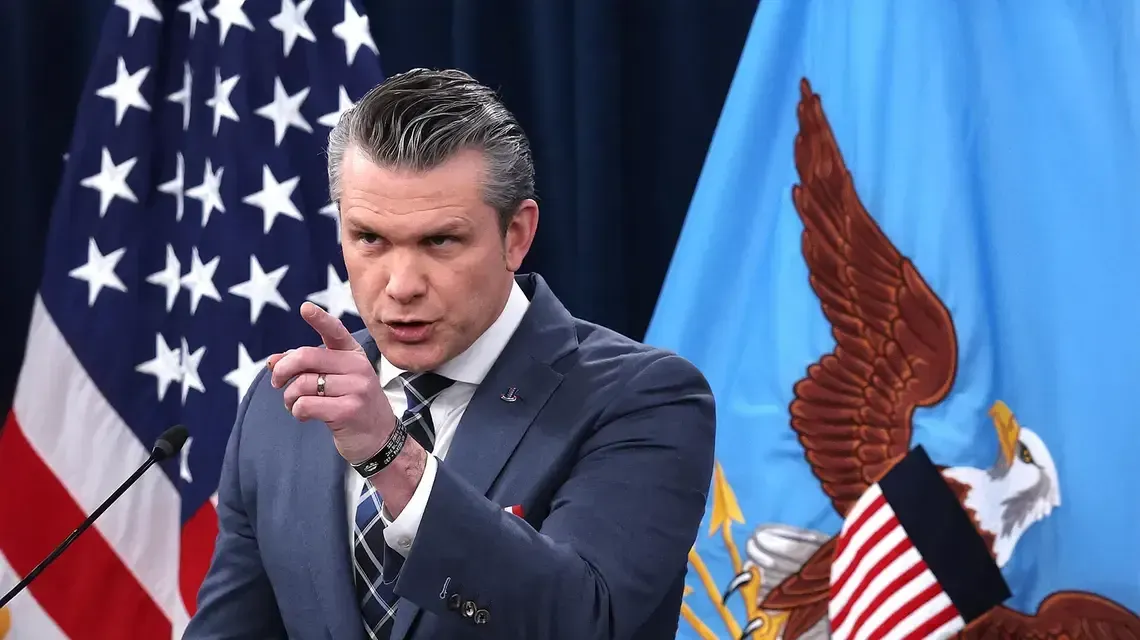
The United States entered its confrontation with Iran with an overwhelming technological advantage, the world's most expensive military, and a Secretary of Defense who, in a programmatic speech, promised his generals they would "crush" every enemy with "violence, precision, and ferocity." The actual result, at least in military terms, has proved less impressive. Mistakes were made that military scholars will likely be analyzing for many years.
Yet there was also a much older pattern at work — one that made it difficult for the current American leadership to avoid those mistakes. It may not, therefore, be entirely pointless for a medievalist-anthropologist specializing in the history of martial practices to offer an assessment.
When an Army Confuses Strength With Spectacle
I study people who devoted a significant portion of their lives and attention to combat. What I have witnessed in recent months — from Secretary of Defense Pete Hegseth's speech to his generals at Quantico to the American-Israeli war in the Middle East — follows a pattern that recurs frequently in my sources.
It is a pattern that is activated when an army confuses the performance of identity — the staging of warrior spirit before its own audience — with the practice of the art of war.
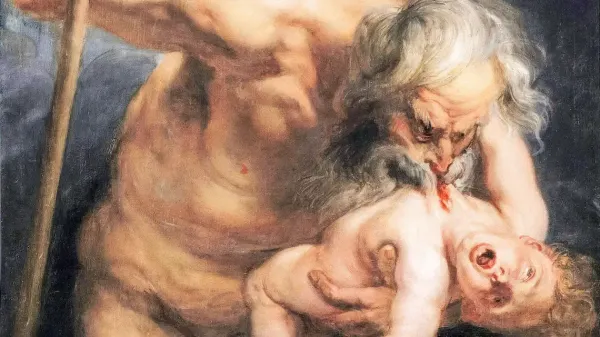
The medieval world — that Central European world, geographically and culturally close to us — even had a name for this kind of mistake. The mentality that produces it was considered the domain of Mars — both a planet and an ancient warrior-god — and the medieval world understood, schooled by its own costly experience, that Mars often loses wars.
Mars and the Sun: Two Cultures of War
Late medieval European cosmology divided the world among the planets whose cycles influenced the behavior of people and nature. Mars governed war that was impulsive, norm-breaking, oriented toward domination and destruction. The Sun, on the other hand, governed something entirely different: socially sanctioned — and therefore honorable and community-building — forms of combat. Contemporary iconography depicts the Sun alongside praiseworthy behaviors such as prayer, almsgiving, and the practice of courtliness.
Late medieval manuscripts belonging to the German Planetenkinder (Children of the Planets) cycle depict the "children of Mars" as brigands and mercenaries, engaged in plunder and not averse to murdering the defenseless. The "children of the Sun," by contrast, are wrestlers, fencers, knights: warriors whose courage is characterized by mutual respect and recognition of the opponent's humanity.
On the surface, this is a distinction between two attitudes toward violence as a means to an end — one that holds that the end justifies the most drastic means, and one that assumes a self-restraint on the part of combatants such that it does not foreclose the possibility of building community with the enemy after the fight. But framing it this way misses the crucial aspect.
The Medieval Cult of Violence and Its Consequences
The historian Richard Kaeuper, in his influential study Chivalry and Violence in Medieval Europe, demonstrated that medieval knighthood was chronically afflicted by what he called the "cult of demigod prowess" — a sacralization of warrior spirit so far-reaching that "Martial" violence merged with honor, piety, and professional ethos, becoming in effect the foundation of chivalric identity.
Following such an ideal of "prowess," the knight fought not primarily in order to achieve specific goals, but because fighting was constitutive of who he was.

Kaeuper demonstrated that this ideology was not merely an incidental element of the instability of medieval society and its susceptibility to outbreaks of violence — it was also their principal source. The cult of prowess generated strategic chaos, in the form of armed forces incapable of de-escalation, composed of warriors who required the existence of enemies in order to sustain their own identity.
Hegseth's Speech Styled as a Warrior Manifesto
The thing is, this is not merely ancient history. On 30 September 2025, the US Secretary of Defense addressed the generals and admirals of his department — which he had just renamed the Department of War. His speech is a remarkable document, and its weight becomes clearer as events unfold. Strip it of the contemporary stylistics typical of the political milieu from which Hegseth comes, and it is in essence a medieval manifesto of the cult of prowess.
Hegseth explicitly places physical dominance, aggression, and lethality as the supreme values of military identity. He invokes the name of God in the same breath as calculated killing. He criticizes accountability mechanisms — inspector general oversight, equal treatment procedures, assessment of commanders' psychological stability — as suppressing the "warrior ethos" (and proceeds to dismantle them).
Furthermore: Hegseth rejects the Biden administration's approach, which he characterizes as "risk-averse leadership," regarding it as a moral failure as well as a practical one (he will later dismiss officers not so much for a lack of strategic effectiveness as for cultural contamination). He declares that warriors "professionally kill people and break things" and "don't necessarily belong in polite society."
He also announces that the motto of the platoon he commanded at the start of his military career was the ancient saying: si vis pacem, para bellum — if you want peace, prepare for war.
The actual logic of his speech, however, runs counter to that motto: he is trying to build not peace through the projection of force, but identity through war.
Why Armies Need Constraints
What Hegseth is dismantling is precisely the "solar" quality, which he sacrifices on the altar of the "Martial."
Yet the medieval tradition I invoke here — developed in times marked by violence, when the political power of the class of professional warriors was greater than it is today — understood the "solar" as the foundation of effective armed forces. The cultural valorization of cooperative, self-restraint-cultivating ways of waging combat was meant to enable sustained and purposeful military effort.
In this light, the accountability mechanisms that Hegseth blames for the atrophy of the "warrior ethos" in the United States are rather the institutional equivalent of what medieval masters of arms called "measure" or "moderation" — the capacity to calibrate force to circumstances and purpose, developed through sustained practice.
What Every Army Is Really Fighting For
An anonymous manuscript from the turn of the 14th and 15th centuries — one of the oldest known European treatises on the art of combat — warns against relying on pure strength and aggression, since such an approach, though sometimes victorious, more closely resembles gambling than true courage.
Such a comparison — a contemporary military operation with medieval thought on the art of war — may be unorthodox, but I do not think it is misplaced.
As in the Middle Ages, the cult of prowess today provides powerful incentives for combat. What it cannot provide is a coherent answer to the question that every armed force must eventually face: what are we fighting for, and how will we know when we have achieved our goal?
Iran's conduct in this war constitutes a case study of what happens when a force animated by a "Martial" culture of warfare encounters an adversary that, while still "Martial" — brutal and ruthless — has a clearer answer to that question.
Iran's Strategy and the Logic of Escalation
It is important here to resist a false symmetry.
Iran's strategy was neither restrained nor humanitarian. Tehran escalated rapidly and deliberately, striking civilian infrastructure in Gulf states not party to the war — targeting desalination plants, airports, hotels, and energy installations. Iran's escalation was both horizontal (affecting 14 countries) and vertical, moving from military to civilian targets. By no measure was this a "solar" response.
And yet it had a strategic logic that the American approach conspicuously lacked. Iran's goal — clearly formulated and pursued — was to make this war costly enough to become, in Tehran's framing, "the last war." It was meant to be an act of deterrence so painful that future military action would become politically unthinkable. Every escalatory move (however brutal and frequently ineffective) formed part of a clearly defined end goal that went beyond the affirmation of warrior spirit.
In other words, behind Iran's violence lay an answer to the question: "What practical goals do we want to achieve?"
FAFO Is Not a War Strategy
The new American "warrior ethos" provides no comparable answer. FAFO — "fuck around and find out," the crude acronym Hegseth used before his generals — is not a strategy. Similarly, "crushing them with violence, precision, and ferocity" is not a defined objective. When Iran read Hegseth's posture as a signal that the United States was not interested in proportionality or restraint, it responded in kind.
Let us reach once more into the Middle Ages. The Arthurian romance Jaufre illuminates this dynamic with precision. Jaufre is a skilled knight who shows mercy to defeated enemies — but only when they operate within the conventions of regulated combat. Against those who signal they will kill him regardless of his "politeness," he mirrors their combative, "Martial" intent without hesitation.
As the scholar Laura Bernardazzi notes, "Jaufre's behavior is directly linked to the behavior of his opponents." In other words, the "solar" warrior cannot unilaterally maintain restraint when the other side abandons it. The level of violence in a confrontation is therefore determined by its most "Martial" participant.
The US/Israel–Iran escalation cycle — one side's move provoking and justifying the other's — is precisely this dynamic, only on a geopolitical scale. And the side that initiated the abandonment of "solar" conventions, possessing the world's most expensive military and an ideology celebrating violence as constitutive of identity, finds itself in a war for which it has, so far, no framework for ending.
What Hegseth's Ideas Mean for Poland and NATO
Why should this concern us Europeans — and Poles in particular, situated on NATO's eastern flank?
Our region is rearming — necessarily and for well-founded reasons. Russia's war against Ukraine has made plain that military capabilities cannot be delegated elsewhere. Rearmament, however, is not only a matter of budgets and administrative decisions. It is also, inevitably, a matter of culture — of what collective identity is being constructed alongside new weapons systems and enlarged defense budgets.
In this context, the atmosphere in parts of Central Europe is moving in a direction that deserves attention. During his visit to Warsaw in February 2025, Hegseth declared that Americans and Poles share an "unparalleled bond" based on a common "warrior ethos."
The Polish side accepted this without hesitation. The very category of the "warrior ethos" has entered Polish public discourse as a neutral or positive term — reported and sometimes affirmed, but so far not subjected to deeper reflection.
Meanwhile, rhetoric close to the "warrior ethos" promoted by the US administration — fascination with courage understood as absolute lethality, suspicion of mechanisms enforcing proportionality as a sign of weakness, contempt for "risk-averse" leadership — finds fertile ground in our region.
It is often read, moreover, as an expression of resolve — refreshing to many audiences after decades of what they perceive as pacifist paralysis.
A Medieval Lesson for Contemporary Armies
History, however, suggests that the matter is more complex.
The medieval sources arguing for moderation — for a calibrated culture of combat — were not written by people who had never seen violence. On the contrary: they lived in times of widespread conflict and witnessed at close range the consequences of unrestrained "cult of prowess." The anonymous author of the chanson de geste "Raoul de Cambrai" — a realistic portrait of knights from the turn of the 12th and 13th centuries — noted matter-of-factly that "a man who is ungovernable has great difficulty surviving" — in combat and in life generally.
A culture in which warrior identity is expressed primarily through "Martialness" does not make warriors more dangerous to their enemies. Such a culture is dangerous to the warriors themselves. And to the societies they are meant to protect.
Medieval masters of the martial arts understood that while both Mars and the Sun were necessary in a cosmos marked by conflict, the latter was the one to be primarily followed. And crucially: the Sun was their choice precisely because — beyond stimulating warrior spirit — it also sustained life in general.
Orginally published in Tygodnik Powszechny, 19 May 2026. Translated with AI.