People on the Spectrum Often Mask Their Neurodivergence. What Price Do They Pay?

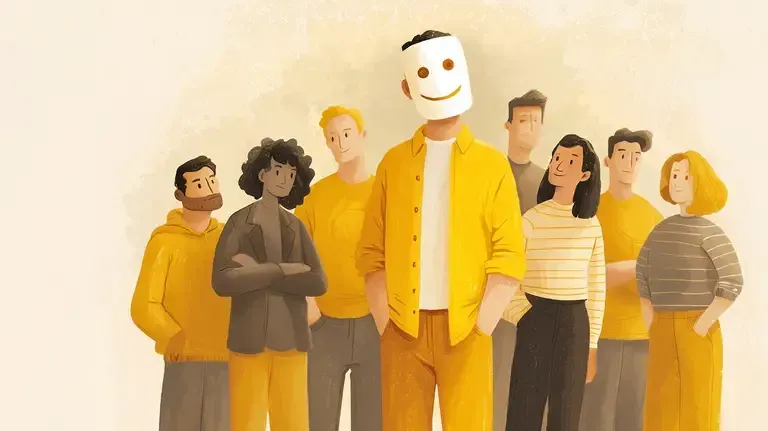
Masking is not an occasionally used tool but a constant effort aimed at surviving in a world created by and for the neurotypical majority.
By Jędrzej Grodniewicz and Anna Urbanek
Imagine you receive an invitation to an exclusive party hosted by a somewhat eccentric circle. You rarely attend such events and are not entirely sure how to behave. You read a little about the etiquette in force there, but the handbook is extensive and confusing. Stress washes over you. A great deal depends on the people you will meet here — among them your teachers, doctors, future employers. You do everything you can not to stand out too much.
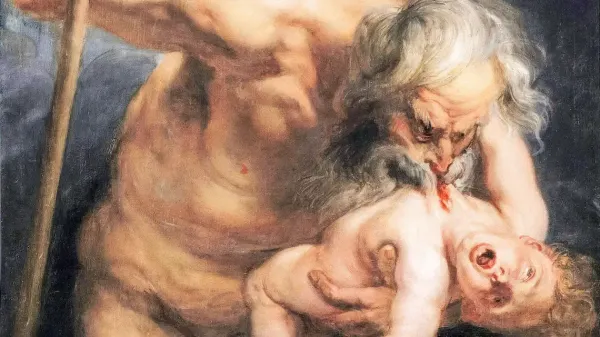
Things begin to get complicated when it turns out that a strange custom prevails at the party. When one person is speaking, those younger than them listen while standing on one leg. Most of the guests seem unperturbed by this. Either they have naturally strong legs, or they have simply been practicing in similar situations for many years. You immediately feel discomfort, and the leg you are standing on quickly begins to hurt. You would like to put your other foot on the ground just for a moment, but this is met with a hiss of disapproval. The exhaustion becomes unbearable and your only thought is to leave as quickly as possible.
If you are a neurotypical person, we appreciate your imagination. If you are a neurodivergent person — in particular an autistic one — this scenario may not seem entirely abstract. It is possible that in your daily life you feel and cope in a similar way, trying to find your place in situations that feel unnatural to you. You mask in order to cope, to succeed, or sometimes simply to survive in a world in which only what is neurotypical is considered "normal."
People on the Autism Spectrum May Not Stand Out at All
When an autistic person shares their experience while simultaneously not fitting the stereotypical image of autism, they often hear: "you don't look autistic." This puzzlement stems not only from insufficient knowledge about the spectrum and its enormous diversity. Many autistic people "don't look autistic" because they invest enormous effort in maintaining a facade of neurotypicality. In other words, they mask.
Autistic masking is the conscious or unconscious process of hiding or suppressing autistic traits and behaviors in order to better conform to social expectations and norms. It can take the form of forcing oneself to maintain eye contact with the person one is speaking to, to wear uncomfortable clothing so as not to stand out from the crowd, or to suppress self-regulating movements such as rocking, flapping one's hands, or tapping one's fingers. Masking can involve restricting or modifying emotional expression so that it is not perceived as excessive, insufficient, or inappropriate — or even pretending to be sociable and extroverted.
Although the term "masking" is most commonly used in the context of neurodivergent people, and autistic people in particular, behaviors aimed at conforming to social expectations are not foreign to neurotypical people either. We can think of this as playing a role — concealing what would feel most natural in a given moment in favor of behaviors we consider socially expected. Think of the artificial friendliness and forced smiles in the workplace, or the emotional restraint in situations where we would naturally feel and express strong emotions.
The Consequences of Masking Autism Spectrum Traits
We mask more, the greater the gap between our natural responses and social norms, and the more our environment demands strict adherence to those norms. Autistic people typically mask far more and far more intensively than neurotypical people, because their natural ways of communicating and responding diverge more significantly from the commonly imposed social norms. For them, masking is not an occasionally used tool — like a single, forced smile — but a constant effort aimed at surviving in a world created by and for the neurotypical majority.

It is worth remembering that the autism spectrum encompasses both non-verbal individuals who require intensive support in daily life and individuals who go undiagnosed until adulthood. Some of the latter appear to manage perfectly well in their personal lives and careers, but pay for it with their mental health.
The consequences of prolonged and intensive masking are serious. The depletion of psychological resources caused by constant pretense can result in chronic fatigue, significantly heightened anxiety, depression, and in extreme cases suicidal ideation.
Moreover, intensified, long-term masking is recognized as one of the primary causes of autistic burnout — a condition that, due to its similarity of symptoms, is often misdiagnosed as depression. Autistic burnout is a profound crisis that can result in the temporary loss of previously acquired skills or a temporary state of non-verbal functioning. Furthermore, masking can lead to identity crises and a lack of understanding of oneself, one's needs, and one's limitations.
Folk Psychology: What Does It Mean to Read Other People's Minds?
To understand the roots of autistic masking, it is worth taking a broader look at the mechanisms governing human interaction. The credit for our ability to communicate so effectively, build relationships, and cooperate with others is commonly attributed to our competence in what is known as folk psychology — the practice of attributing mental states to one another and using those states to interpret behavior.
When we see a colleague sitting at the desk beside us begin to yawn and fidget in their chair, we can assume they are probably bored or tired. We might also suspect they are about to get up. If we suggest stepping out for a break together, the gratitude and sense of being understood we see in their eyes will be thanks to our proficiency in folk psychology.
Folk psychology is generally held to consist of two components. The first is the so-called ability to read minds — the skill of forming hypotheses about what someone is thinking, feeling, or intending, based on observing them. Although we rarely notice it, our effectiveness in mutually reading each other's minds is practically spectacular, and it comes to us without much effort.
Without a word, we make way for the person sitting beside us on the bus when they start to rise, seeing the stop approaching. Nor are we surprised to hear the voice of a shop assistant coming to our rescue after we have frozen, blank-faced, before an enormous shelf of wines from every corner of the world. Our daily lives consist of so many such successes that we usually notice and remember not them, but the occasional misunderstandings that do occur.
We would not be so effective at reading each other's minds, however, if we were not simultaneously shaping each other's minds. This mutual shaping of minds is the second key component of folk psychology. Every member of society is subjected to this kind of mental processing from childhood.
When a parent, seeing their child push past others in the queue for the slide, says: "I understand you're impatient, but you have to wait for the children who were in the queue first to go down," they are not only teaching the child to recognize impatience as a natural experience in similar situations — they are also reminding them of the existence of more or less formal rules governing the use of shared spaces. Failure to conform to those rules can carry consequences, perhaps the most serious of which is deviating from social norms to such a degree that we become incomprehensible to others.
What Does the Neurodiversity Paradigm Propose?
There is nothing wrong with learning the etiquette of queuing at the slide. As we mentioned, it is to the practices of mutually shaping our ways of being that we owe the ease with which we generally manage to communicate and cooperate. But what happens when the dominant behavioral patterns and informal rules of a society are used to shape minds that experience the world somewhat differently from most of us?
Under the neurodiversity paradigm — initially developed collectively by the autistic community and subsequently by researchers including Nick Walker and Steven K. Kapp — we recognize that there is great variation in the ways people experience the reality around them. This does not mean that any deviation from the statistical norm should be interpreted as a deficit or a disorder.
Just as biodiversity has a positive effect on the natural environment, stabilizing the development of ecosystems and benefiting all the organisms within them, neurodiversity can have a positive effect on our social environment. Neurodivergent people — including autistic people — can enrich the social reality in which we live through their unique perspective. That is why, under the neurodiversity paradigm, autism is not a developmental disorder (as it was previously conceptualized exclusively) but rather one of the ways — or an entire universe of ways — in which the world can be experienced.
Here we encounter a problem connected with the mechanisms of folk psychology, and the shaping of minds in particular. Many autistic people display a range of idiosyncrasies and peculiarities in their behavior. These include sensory hypersensitivities and hyposensitivities, slower focusing of attention than in many neurotypical people, peculiarities of posture and gait, tics, and stereotypies such as rocking, hand-flapping, spinning, thumb-twiddling, or echolalia — the automatic repetition of overheard words, phrases, or sounds. Such behaviors do not fit accepted norms and are met with incomprehension and rejection.
Emotional Regulation on the Autism Spectrum
Just as one should not push past others in the queue for the slide, one should not rock or flap one's hands during a meeting. At a job interview it is appropriate to wear a well-fitted suit and maintain eye contact with the interviewer. And yet autistic people may use rocking or hand-flapping to regulate their emotions, which enables them to concentrate significantly better during a meeting — while wearing tight-fitting clothes or maintaining eye contact can be a source of discomfort bordering on pain.
We are thus confronted with a difficult question: to what degree should we strive to unify our social behaviors and ways of experiencing reality? As philosopher Leon De Bruin and psychiatrist Derek Strijbos suggest, the excessive shaping of neurodivergent minds to a neurotypical standard can result in depression, autistic burnout, and even suicidal ideation in neurodivergent people.
There is yet another consequence of the excessive shaping of all minds to a neurotypical standard — one that De Bruin and Strijbos do not address. In the case of many individuals, this process leads not to the shaping of their own minds, but to the shaping of the mask behind which they must hide in order to pass as neurotypical.
Understanding What a Neurodivergent Person Experiences
For many autistic people, masking constitutes a form of playing a role. A comparison with Robert De Niro — who, preparing for his role in Martin Scorsese's Taxi Driver, worked as a New York cab driver for several weeks — will not be sufficient here, however.
To understand this experience, let us think of an undercover police officer infiltrating a dangerous criminal organization. For her efforts to be fruitful, she must assume a new identity. Her habits, preferences, and ways of responding to various situations must be replaced by new ones, consistent with her criminal alter ego.
The stakes are high. If she gives herself away — by displaying her true emotions, for example — she will be unmasked. This may carry mortal danger. After a while, she may have entered her role so deeply that she herself no longer knows which emotions, reactions, and behaviors belong to her, and which are part of the role she has assumed. The same is true of autistic masking.
Some masking autistic people are able, to a degree, to distinguish themselves from the mask they are forced to wear. One such person is quoted by psychologist Laura Hull and colleagues: "I need solitude, because that's when I can be myself and not think about how others perceive me." Many, however, lose the ability to recognize who they are beneath the mask. A 39-year-old masking autistic woman, quoted by Kate Seers and Rachel Hogg, describes her experience as follows: "I don't actually know who I am. When I think about the mask I wear, I no longer know what is part of the mask, what is part of me, and which parts of the mask have fused with me so completely that they have already become part of me."
This kind of uncertainty does not arise exclusively in the context of masking. People with social anxiety disorders, for example, may be unsure whether their decision to skip a Friday outing with friends was "made" by them, or somehow independently of them — by the disorder they are struggling with. Nevertheless, the blurring of the boundary between oneself and the mask one wears constitutes a serious, if not yet sufficiently recognized, cost borne by those who are compelled to mask their neurodivergence.
Suppressing Spontaneous Reactions Makes Emotional Regulation Harder
Let us pause for a moment and consider how we know what makes us laugh. Often our best clue is our own laughter. When someone says something I find funny, observing my spontaneous reactions is a good way of learning something about myself — enriching my self-understanding.
Many masking autistic people do not always find the same things funny as neurotypical people, or process humor differently. But not wanting to stand out, they adopt — against their own inclinations — the strategy of laughing when others laugh. In doing so, they lose the possibility of getting to know themselves better through observing their own natural, spontaneous reactions. Worse still, they may be perceived by neurotypical people as lacking taste or even personality.
There are more examples of a similar kind. Masking people routinely suppress certain behaviors that help them regulate their emotions — such as the hand-flapping already mentioned — which leads to a poorer understanding of how they can most easily manage tension.
Others, in order to conceal traits commonly associated with autism, hide their interest in narrow and often quite technical topics, thereby losing the possibility of exploring, deepening, and sharing their passions with others. By suppressing a great many spontaneous reactions on a daily basis, many autistic people arrive at the mistaken conclusion that they are cold and incapable of feeling deep emotions.
The response to the ancient injunction "know thyself" — demanding for everyone — becomes almost unattainable for those compelled to mask constantly.
An Autism Spectrum Diagnosis as a Moment of Revelation
Are neurodivergent people condemned to masking? Or might we free them from it at least in part, if the neurotypical majority were willing to shift along the social bench a little, making room for other ways of experiencing reality?
As Robert Chapman — who holds a professorship in critical neurodiversity studies at the University of Durham — observes, answering this question requires deep reflection on what we have grown accustomed to calling "normal." The ways of establishing how a "normal" person ought to behave and experience the world — which, according to Chapman, have their roots in medical classifications and the economic drive to achieve desired worker productivity — must prove insufficient when confronted with phenomena concerning the meanings, experiences, and senses that a person gives to the world, to other people, and to themselves.
Devon Price, in the book Unmasking Autism, argues that for many autistic people, a diagnosis — even one received in adulthood — constitutes a moment of revelation. Many aspects of their everyday experience and past events begin to make sense, falling into a new, more coherent narrative about who they truly are. Many also see for the first time which of their behaviors result from masking. This in turn enables them to embark on the difficult path of unmasking — a path on which they are often supported by other neurodivergent people who can show them a world that departs from neurotypical standards.
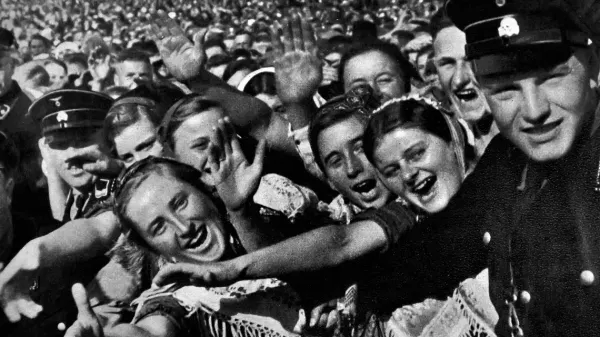
As theorists such as Price and Chapman suggest, the social revolution whose driving force will be neurodivergent people may in this sense be salutary for all of us. For the necessity of constant masking, these people pay with a sense of lostness — and often with their health. The more sensitive we become to their experience, the sooner we will recognize what roles we all must play and what masks we all must wear every day in order to earn the eagerly rationed, mysterious designation of "one of us."
Orginally published in Tygodnik Powszechny, 2 December 2025. Translated with AI.