Beautiful as Life

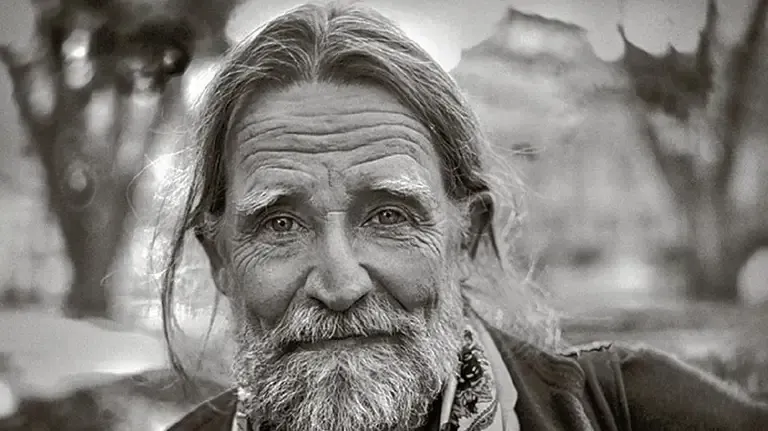
Stephen Jenkinson, Palliative Care Specialist: Our Mistake Is That We Try to Love Life Against Death, As It Were. And That Simply Cannot Be Done. To Love Life Means to Be in Grief for Life. These Are Not Separate States: Love and Grief.
By Stephen Jenkinson and Agata Okońska
AGATA OKOŃSKA: What does it actually mean to help people die?
STEPHEN JENKINSON: A few years ago I would have said it was precisely what I was doing in the hospice and visiting the terminally ill in their homes. But now I see that what I am actually doing is making people die consciously. When death draws near, they try to occupy themselves with everything except dying. Their surroundings support them in this unhappy loop: "What is mother saying, a grave — there's no need to be so pessimistic..." An 87-year-old woman with cancer, who has not left the house in months, who has barely risen from her bed in weeks. How can anyone pull the wool over her eyes like that? She herself, of course, also does everything she can to avoid accepting her present situation.
And you force people to face the truth?
I cannot force anyone to do anything. I come, I sit down — never face to face, always turned in the direction the dying person is looking. "How are you?" I ask. "Fine," they often answer, and sometimes they complain of pain and loneliness. Very few begin by speaking of fear straight away. "But what is your current situation in life?" I ask. I almost never hear the simplest, most obvious answer: "I am dying."
That won't come out.
That is precisely my point. It is a little like pregnant women: any number of doctors and well-meaning people will convince an expectant mother to function for as long as possible as though she were not carrying a child inside her. And women believe that the sign of a well-managed pregnancy is full activity throughout. Only in this way they may go nine months without ever truly feeling themselves to be with child. And then comes the birth — and the trauma. Today, death catches the dying by surprise. And yet one can prepare for one's end.
How?
By assuming it will happen. I never ask anyone to accept the fact that they are dying, however. I once visited a woman who greeted me at each successive visit growing weaker, yet wanted to talk only about her work in a church organization and about renovations to her house. Eventually I said: "I have the sense that you are restless and running from something — correct me if I'm wrong." At that she burst into tears, and for the first time we talked about her death. I visited her several more times; our meetings grew increasingly peaceful, and toward the end we mostly just sat in silence. It was wonderful to watch that woman find her dying within herself, to see her begin to settle into it.
Our mistake — I would call it a common one — is that we try to love life against death, as it were. And that simply cannot be done. To love life means to be in grief for life. Love and grief do not occur separately. If you are grieving, it means you love. If you love, it means you already feel sorrow — even if you don't know it. Why does the sight of a meadow full of flowers move me so deeply, or morning frost, or a sunrise? Because it will all be over soon. Because these are things I can enjoy for only a moment. Do you know what the dying name as the object of their greatest fear?
Suffering?
Yes. They say they are not afraid of death, only of the pain. Yet the vast majority of them feel no physical pain. Modern palliative care is actually very good at relieving it. Everyone is given medication, yet they remain afraid — even more afraid. Yes, nearly everyone I have worked with was terrified. Only it was not suffering that truly terrified them. The nameless dread of our times is the fear of what those who survive will do with me once I am dead. Not one of the people I have accompanied in dying was free of it.
But what are we actually afraid of? That we won't be buried properly?
We live in a culture of uprootedness. Community life, living in contact with older generations and with one's ancestors, is utterly foreign to us. If I do not know my ancestors, what hope can I have of becoming an ancestor myself? It is the fear that after my death everything will carry on as if nothing had happened — that no one will even notice our departure. How many such scenes have I witnessed: hours, days, weeks before death, someone begins speaking of a brother with whom they broke off relations years ago, or a family home they never returned to. I once accompanied a man who could find no peace, and I was unable to help him, until finally, when he was already very weak, he began to speak — not directly, only in allusions — of the fact that he had been adopted and that he regretted never having found his biological parents. We set off to search for them. We did not make it in time, but I believe that man died reconciled with himself and with his ancestors.
Have you never met anyone who was not afraid of death?
I have met a few, yes. It is possible not to feel fear of death even in this death-phobic culture in which we live. But I would not place too much weight on a declared absence of fear. I once heard: "I am very seriously ill, but I refuse to let that become the content of my life." I ask: what should be the content of our lives, if not what is serious — namely, that we are dying?
And religious people?
In my experience, religion does not protect against doubt, does not stop questions from arising, and is not a cure for the fear of death. I do of course encounter people whose religiosity has shaped them strongly enough over a lifetime to offer them a kind of shelter in the face of death. They do not ask too many questions; they have a very concrete idea of what is about to happen; sometimes they simply fall silent.
Does that silence unsettle you?
I believe that people who are dying have an important task to accomplish. I know — the accepted view is that the terminal state is such a heavy matter that it would be wrong to burden the dying person with anything, to ask anything of them. I ask nonetheless. I ask, even though no one asks me to. In fact, my asking, and the entire message behind it, is often received as an unwelcome, uncomfortable gift. And yet I regard it as my ethical and moral obligation. I ask those who are dying to do this shattering, indescribable thing that demands the language of poetry — the thing that stands before them. To die beautifully.
And they? How can one accept such a request?
It is of course very hard for them, because they have no practice in dying.
Practice in dying? One only dies once.
One dies many times. And I am not speaking here of the symbolic deaths at the milestones of our lives — I mean real death. Let me explain. The belief that death is a single event is one of the central spells of our culture. Effective enough that the mind surrenders before it even attempts to grasp the thought of dying multiple times. And yet there are still places in the world where the truth that one dies many times is close at hand. In a Native village like the one near where I live, when someone dies, the windows and doors of the house remain open constantly. The message is: death is not a private matter. Dying is a public event, which means that my dying is not mine — it belongs to the community. Not in the sense of ownership, but the way a river flowing nearby belongs to the village. It is part of it. The question of etiquette arises here, of course: no one comes to a dying person's house simply to watch them die — there are established forms that are observed. But everyone has the privilege of learning to die by living through the deaths of others.
A privilege?
An obligation, even — because participating in the dying of members of the community, even those one did not know well, is simply what one does. Only as very small children do we have the chance to approach death in a natural way: pushing through the people gathered in a room, reaching the deceased, touching, seeing, smelling. Most children climb onto the bed of a dying grandparent without a second thought, to the horror — or at best the embarrassment — of their parents. Not because they are especially brave, or because they are little Dalai Lamas: they simply have not yet learned that death is something to be feared. They have not yet acquired the reflex of avoiding death that we have trained to perfection.
When do they lose it?
When they begin to consciously experience cognitive dissonance: they are already aware that a deeply sad event is approaching, and their experience tells them that in the face of sadness one seeks the warmth of another person. But all around them they see adults behaving "normally" — or adults who are not behaving "normally" but are immediately brought into line by the others. Placed before a choice between their own judgment and the example of the adults, they follow the adults. Which means they must abandon their own intuition and inner wisdom in order to be accepted by those lunatics who clothe and feed them.
Sometimes someone asks my advice: "Do you think I should bring the children to the hospital, to my father?" "And why wouldn't you bring them?" I answer. "Well, you know, he looks rather terrible — no teeth, drooling, gasping for breath every few moments." It is true that the dying often look poor and that watching them is not easy, but the question is: why should children not see this? Because we ourselves cannot bear the sight?
If at all possible, I prefer to spare a child the trauma.
Please do not misunderstand me: I am not recommending the opposite — holding a child in place to make sure they watch their grandfather vomit. Let us get out of children's way and observe where their curiosity leads them. Let us, for example, bring children to the threshold of that treasury of wisdom that is the room of our dying parents — and leave them there. Let us not go in with them. They may be inside for a minute, or perhaps half a minute. A life-giving half minute. Only let us not make that considerately concerned face when we get back home, let us not question them about anything. Let us allow wisdom to do without our prejudice-laden commentary.
Someone might say: "I want them to remember their grandfather as he was."
So a memory of grandfather ill and drooling is unauthorized? Only memories of grandfather giving the grandchildren rides on his knee are authorized? Are we to make our children believe that life is a Disneyland into which death or divorce occasionally creeps as an unpleasantness? That unpleasantnesses are not real, and only what is nice and pleasant is real? We are feeding our children cotton candy — that is what we are doing to them, and we call it compassion, love, good parenting.
I find it hard to accept what you are saying. It unsettles and wounds me.
My aim is not to wound people, but to make them begin to live consciously. Of course I know how hard it can sometimes be to try to remain faithful to something greater than one's own satisfaction. It is an enormous challenge everywhere that market-economic thinking has come to dominate all other ways of thinking — which is to say, in most places in the world, including Poland, from what I can see. I am certainly not trying to make harder what is already difficult.
Perhaps you are not trying to make it easier, either.
I know some who occasionally try: McDonald's, therapists, priests. I try to give people something different.
You respond to people's spiritual needs in the same way as priests and therapists.
I would not use the word "spiritual," because that would suggest there are "non-spiritual" matters or needs. I would say: "life needs." What I do needs no confirmation of its status through the existence of some special state. I deal with life. Which is compatible with the fact that I deal with death. Those who work in the death business are often expected to ease and to console. That is a great misunderstanding: you cannot make someone feel comfortable with death, because comfort implies being in a familiar environment. How could I console a dying mother of four adolescent children? What consoling reply can I give when she confides her anxiety about their fate? Consoling, after all, consists only in building an illusion of closeness. I want people to meet their death — and for that to happen, death cannot be domesticated. Domesticated, it is not what it is: a radical otherness. Domesticated death, easy death — that is a contradiction in terms.
So what did you say to that dying mother?
When I speak with the dying who are consumed by fear, isolated physically and psychologically from those they love, I ask: die for them. Not in order to release them from you — no! Quite the opposite: in order to remain with them and within them. Set the table for them. Your death is the last and most important thing you can give — do not miss it. Do not leave your loved ones at an empty table. Let them eat of you. When you die as a parent, your death is the last lesson you give your children. Your death is a gift for them — a gift of love. That is why how you die matters so much. The manner of your dying is the last declaration of love to your children, your spouse, the people of your community. It is an opportunity to address them in a way you have never addressed them before. It is a gift of nobility to those who will have you as an ancestor.
Are you drawing on the Last Supper?
The Last Supper is the masterpiece of dying. Jesus knows he is going to die — and what does he do? He sets the table. He says: "Take and eat, all of you," and also: "This is my body." He feeds with his own death. That is the great teaching: that one can be nourished by death.
If I had to choose one scene from that story, however, it would be the moment when Thomas places his finger in the side of the Risen Christ. I do not understand why Thomas was given the epithet "doubting" for that gesture. In my view he is the most courageous, the most human figure in the New Testament. Not an unbeliever demanding proof, but a man of great openness and courage. He is not looking for confirmation that Jesus is alive, as his gesture is commonly interpreted. He is opening himself to the death of someone he loved so deeply. If he had wanted to make sure Jesus was alive, he would not have put his finger in his side — he would have said: "Speak to me, look at me." That is what people say when they cannot bring themselves to accept someone's death. Whereas Thomas, in a gesture of radical love, accepted the death of Jesus. To venerate the resurrection without accepting the death is a mistake.
These are hard words.
I am opposed to "euthanasia by euphemism." What do people say when they inform someone of a death? They say things like: "he has passed," "she is in a better place" — and to children: "he is playing with the angels." This is the ruin of language and imagination. Why does speaking about death so often resemble a guessing game — which cup is the little ball hidden under? There is only the constant movement of upturned cups trying to cover the true meaning.
Take the phrase "losing a loved one": it seems a perfectly friendly synonym for death. Let us consider which party it places responsibility on for the death. I once asked, at a social gathering where people were not expecting the subject of death, who had lost money in a foolish way. People began talking at length about how bad they had felt in such situations, how guilt had gnawed at them afterward. In exactly the same tone I asked who had lost a mother or father. A few people, without thinking, nodded — but then froze. Something had reached them. For to describe death in terms of loss is to make those who survived responsible for it. How much better it would be to say "my father died" instead of "I lost my father" — that would make it immediately clear that dying is something one does oneself, not something that happens to one. And let us be very clear: there is no obligation to lose your father just because he died.
Let us return to those euphemisms...
Death cannot be described, and the point is not to describe it — but one can address an invocation to it. One can, instead of talking about dying, speak in a dying language. The point is not at all to survive, to protect oneself from despair. I ask my students at Orphan Wisdom School to fail. I want them to fail in their attempts to name and understand, to fail as much as possible, until they learn to do it beautifully. I teach the same to the terminally ill and their families.
And yet people speak in terms of failure about the death of those they love — especially children.
In the documentary film Griefwalker, which tells the story of my work, we see the parents of a dying two-year-old girl who decide to discontinue life-sustaining treatment. Their faces, and the face of that child, as they remove the equipment — their laughter as they lie together, perhaps for the last or second-to-last time, in their own bed — say everything about failure. And the mother's weeping when the child died... The failure is in trying to understand that, to tell it. What bearing witness to the deaths of many people gives you is a certain quality of heart. Not knowledge — knowledge is overvalued in our culture — but a kind of sensitivity. Following from it comes a growing openness, a curiosity about one's own death. Because death is interesting — if we are speaking of deep curiosity, not the everyday kind.
One of the beautiful aspects of death, still possible to discover even in our mad times, is its everyday mysteriousness — its "dark domesticity," I would say, borrowing from the American poet Mary Oliver. A true mystery does not grow clearer as you explore it.
For many of us in this part of Europe, death remains Celan's "master from Germany."
In war there is no death — there are murders, and murder is not a subset of the category death. They are entirely different events: existentially, morally, even grammatically. There is no passive form of the verb "to die" — there is no such thing as "being died." Dying is something one does; it is not something that can be done to someone. In wartime no one dies — everyone is killed, directly or indirectly, by starvation, for example.
Poland's experience from the Second World War stands in the way of an open and easy conversation about death. I walked through the Jewish quarter in Kraków — for someone raised and living in Canada, it is an experience beyond comprehension. I therefore have no intention of teaching people living in Poland anything about life here. But I would like to say something: those who lived through the war pass on to their children a kind of muteness about matters connected with the war. "There is nothing to talk about," or "words cannot convey it," or "you wouldn't understand anyway," or "I don't want you to know about these things."
What do the children of victims learn about the war?
Almost nothing. But they learn a great deal about trauma: above all, that it demands to be spoken. And that it demands intergenerational understanding at a deep level. The fact that your grandparents' youth is inaccessible and inexplicable to you is a profound wound. You can adopt a so-called compassionate stance toward your grandparents and not ask them about the war — but then you will be observing the rules imposed by trauma, you will be deifying it. And living in a deepening emptiness, a world of values that seem to vanish for no apparent reason, where trauma is the only god.
The question of redemption is another matter — but truly, it is not for me to teach you about that. You tell me what redemption is. Explain to me the depth of that mystery which I grazed against, standing in the place where there was a gas chamber and seeing, above the old barbed wire, a man digging potatoes. I cannot explain it — but something tells me that redemption connects the preserved barracks and gas chambers, that farmer and me, a man from Canada who was given the chance to touch and to see.
Why do you do this?
One day I realized that my children were going to die. It was like a blow of truth — that in bringing them into life, I had set them on a road that leads past my own deathbed to their own. And I felt that for nothing in the world would I want my dying children to fall into the hands of some unconscious, unwise people. "Are you going to take care of them yourself, then?" I asked myself. "Do you wish they would die before you?" Of course not. I will have to trust someone. You. Your children.
STEPHEN JENKINSON describes his calling as that of a "griefwalker." For many years he accompanied the dying in hospitals, hospices, and homes; he also worked with their families and with people in grief after the loss of loved ones. He studied theology and social sciences, worked at the University of Toronto and at a local hospital, was a co-founder of the Children's Grief and Palliative Care Centre, and trained hospice workers. In Canada, where he is from, he founded the Orphan Wisdom School. He has visited Poland on several occasions at the invitation of the Pathways Foundation.
Orginally published in Tygodnik Powszechny, 26 October 2013. Translated with AI.