From Poznań to Suez: 70 Years Ago, Revolts and Crises Changed Poland and the World

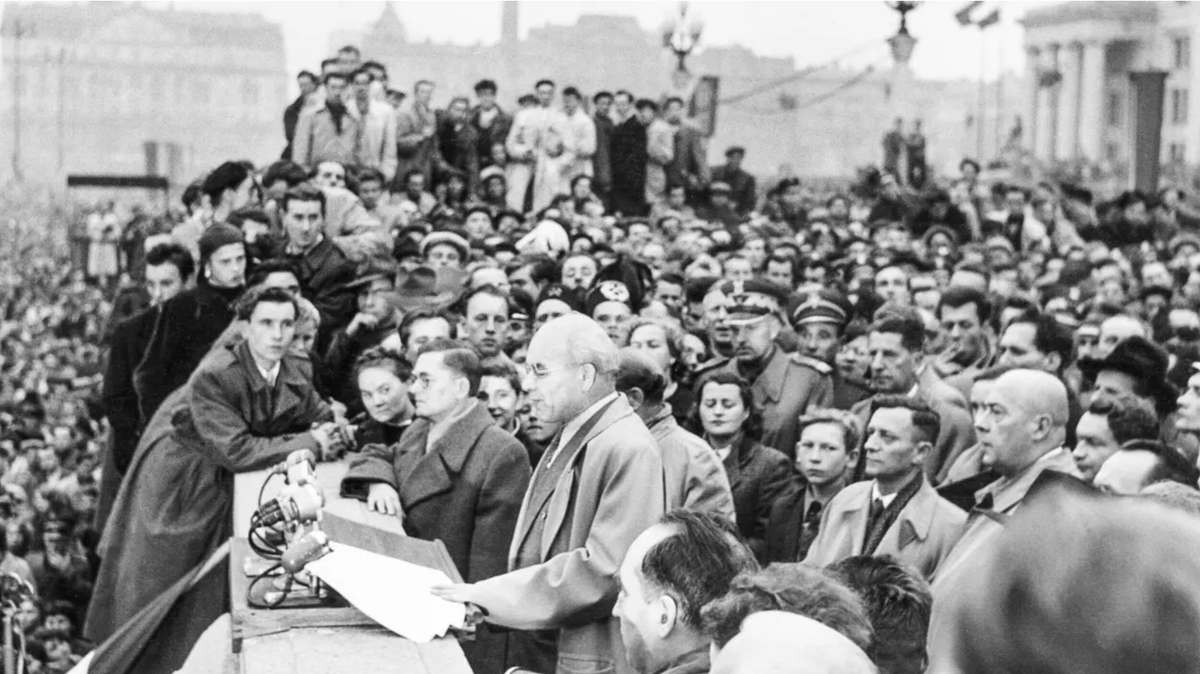
The Poznań June and then the Polish October, the bloody uprising in Hungary and the war over the Suez Canal. How did 1956 change Poland, Europe, and the world?
By Łukasz Kamiński
The story of the turbulent year 1956 has to begin three years earlier, with Joseph Stalin's death (March 5, 1953). Its consequences included not only a brutal struggle for power in the Soviet Union and the first wave of protests in the Eastern Bloc, but also a thaw in international relations.
1953: Stalin's Death and the Struggle for Power
Stalin left no obvious successor, so immediately after his death the idea of collective leadership emerged in the Kremlin. It soon became clear, however, that Lavrentiy Beria, head of the secret police (the NKVD), was in the strongest position. What's more, he was the only one with a program of reform, proposing internal liberalization and détente on the world stage.
A coalition of his enemies quickly formed, and at the end of June 1953 they engineered Beria's arrest (he was executed a few months later). They divided power among themselves: Nikita Khrushchev, First Secretary of the Central Committee of the Communist Party of the Soviet Union (CPSU), Prime Minister Georgy Malenkov, and Foreign Minister Vyacheslav Molotov. Of the three, Khrushchev gradually emerged as the most powerful.