Children of War in a Palace: Fear Returned at Night, by Day They Staged Plays
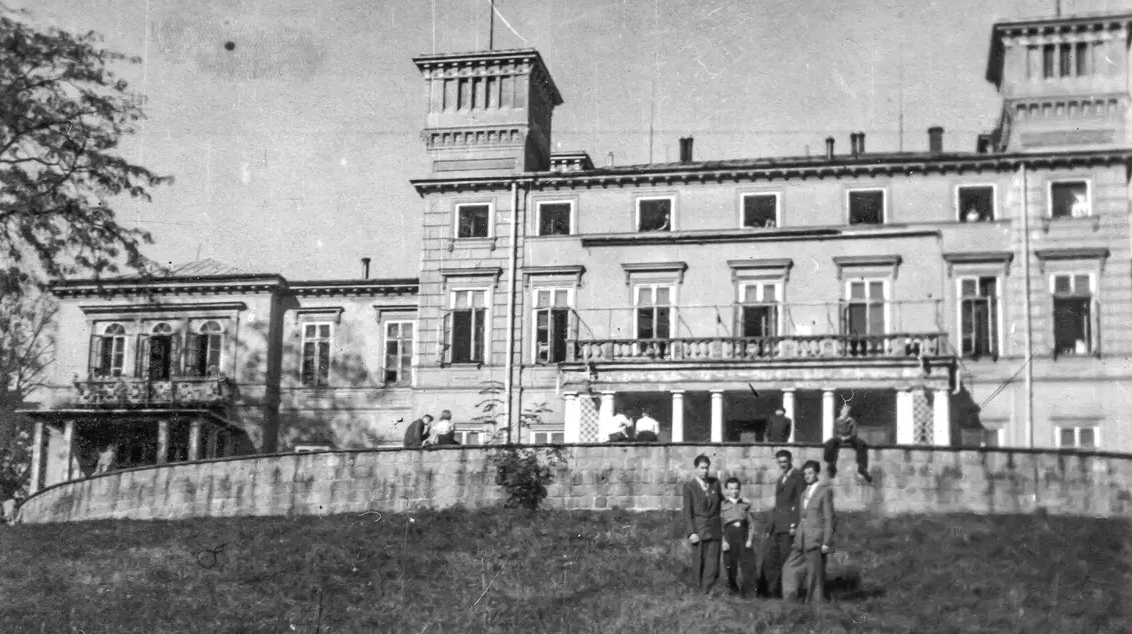
After the Second World War, several hundred Polish orphans ended up in the palace in Krzeszowice. Here they found a home, a school, and peace. Eighty years on, they recall how they got their lives back.
By Julia Kalęba-Wysocka
What remains: an entry in a diary, lines rehearsed for a part in a play, a photograph with the inscription, "Don't forget Halszka." And an empty palace on a hill, surrounded by a park.
A fence stretched between concrete posts now makes you look at the building from a distance. Two stories and towers, a terrace and palace wings, all covered in dirty yellow paint that is peeling away to reveal the plaster beneath. Plywood covers the windows; a memorial stone is overgrown with moss. The year is 2026.
Eighty years earlier, in autumn 1946, they walk along a cobbled path through the park: Marta (21), who had spent a week in the punishment cell for straying from the barrack in Siberia. Anna (16) and her sister Aleksandra (15), who had survived a train bombed by the Germans; Ola walks in a black dress. Jan (20), who had spent a night standing in the snow, ready to flee, listening to cattle bellowing and gunshots coming from the burning village of Korościatyn near Buczacz. Janek (10), who had played tracking games near a German training ground outside Lviv. Krystyna (19), who upon returning to her home in a village in Volhynia found a half-drunk cup of tea. Half a year later, her 11-year-old sister Mirosława will join her.